
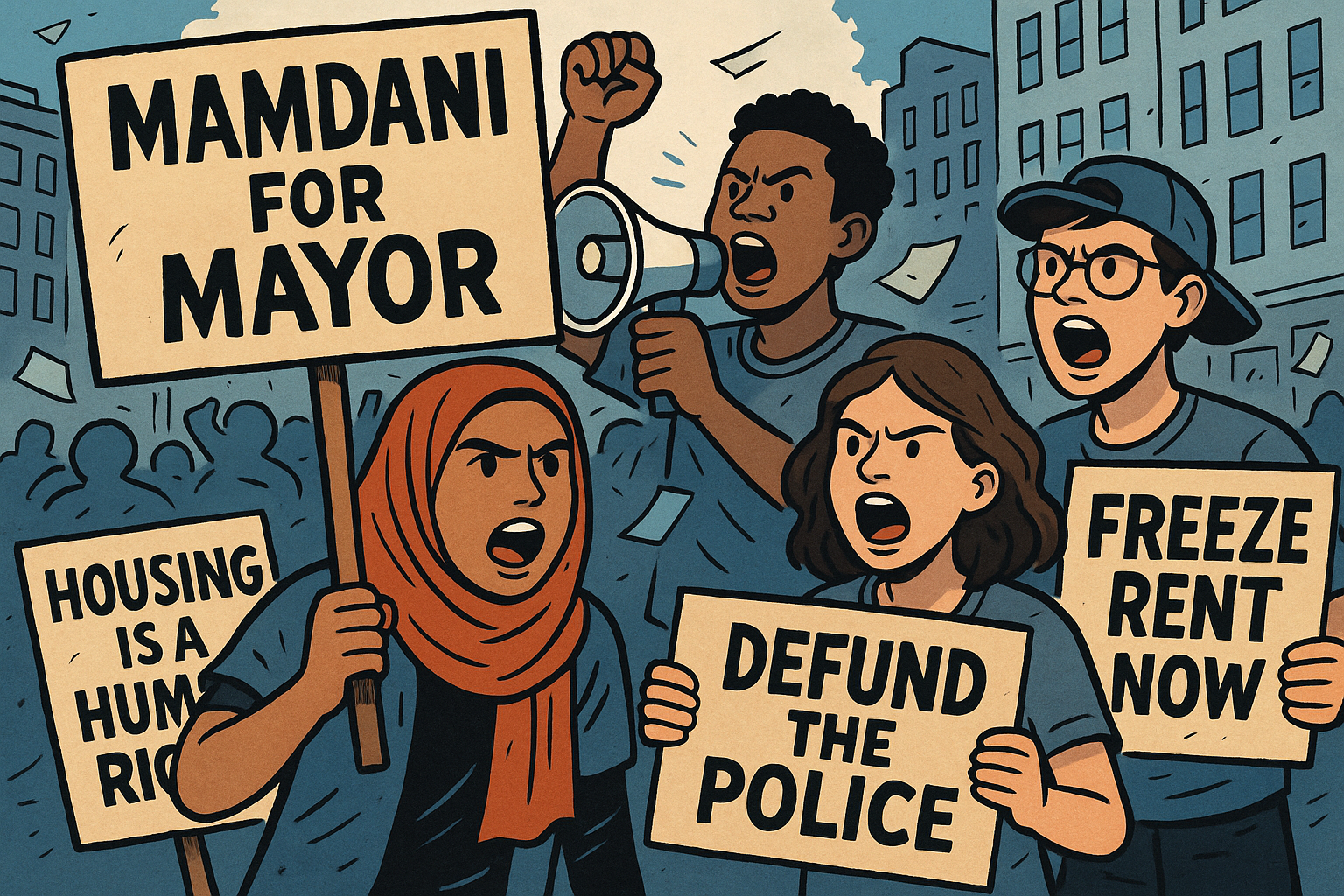
The Democratic primary election for the mayor of New York has sent shockwaves through the political landscape. Zohran Mamdani, a 33-year-old with no relevant experience, secured the nomination on a platform calling for a socialist overhaul of the world’s financial capital — while expressing sympathies for Islamist terrorists in a city home to over 1 million Jewish residents.
Mamdani’s rise seems inexplicable, but it’s a symptom of a broader trend: a generation of young people, adrift in a sea of meaninglessness, latching onto leftist political fads that promise purpose but deliver little substance. For years, young urbanites have flocked to causes that feed their sense of self-righteousness, with little regard for historical context or policy coherence. These bumper-sticker crusades offer a seductive sense of moral superiority, filling a void left by declining religious affiliation and a broader erosion of purpose. In step charismatic figures like Mamdani, who peddle simplistic solutions to complex problems.
Take environmentalism, which has become a near-religious orthodoxy for many young people. They eagerly embrace campaigns championed by the church of climate change, disregarding evidence where green policies backfire. Poor forest management, driven by senseless regulations, has fueled catastrophic wildfires and released massive carbon emissions. Utility scale solar and wind projects, hailed as eco-friendly, have led to massive destruction of essential wildlife and habitats. Bans on plastic bags push consumers toward heavier, more emission-intensive alternatives like paper or cotton. These contradictions are brushed aside in favor of the warm glow of “doing something.”
The vilification of law enforcement follows a similar pattern. Movements to defund the police or dismantle immigration enforcement have gained traction among young activists, spurred by isolated or fabricated incidents of police misconduct, like the now-debunked narrative surrounding Michael Brown’s death in Ferguson, Missouri. These campaigns paint law enforcement as inherently oppressive, ignoring the reality that police presence protects vulnerable communities. Data shows that reducing police resources correlates with spikes in violent crime, disproportionately harming minority neighborhoods. Yet, the allure of “abolition” overrides these inconvenient truths.
Perhaps most troubling is the surge of antisemitism, cloaked as advocacy for Palestinian rights. Protestors chanting “Globalize the Intifada” glorify the Islamist supremacist ideologies driving violence against civilians, including the horrific attacks of October 7, 2023. They frame their activism through a lens of identity politics that absolves radical actors of responsibility, excusing atrocities as “resistance.” This moral relativism thrives in a climate where historical knowledge is shallow, and social media amplifies emotionally charged slogans over nuanced debate.
At the root of these trends lies a deeper malaise. Religious affiliation in the U.S. has plummeted, with only 47% of Americans belonging to a church, synagogue, or mosque in 2020, down from 70% in 1999. This decline has left a void of meaning, particularly among highly educated, urban young people. Into this vacuum flows a torrent of performative activism, fueled by social media’s dopamine-driven feedback loops. Platforms like X amplify viral causes, rewarding outrage and oversimplification over substance. Mamdani’s appeal lies not in a coherent policy vision but in his ability to tap into this milieu, offering gauzy promises—taxing the rich, freezing rents, ending incarceration—that resonate with a generation craving purpose.
These fads are not harmless. Policies born of feel-good ignorance, like defunding the police or banning fossil fuels without viable alternatives, have real-world consequences: rising crime, energy shortages, and economic stagnation. Mamdani’s platform, with its calls for radical redistribution and sympathy for illiberal ideologies, will destabilize a city already grappling with post-pandemic recovery. For his supporters, the appeal lies in the emotional rush of rebellion, not the messy reality of governance. The infatuation with leftist fads reflects a generation’s longing for something greater than themselves. Without the anchoring forces of faith, community, or critical thinking, young people are drawn to causes that offer moral clarity, no matter how detached from reality. Mamdani’s rise is a warning: when purpose is absent, simplistic ideologies and charismatic demagogues rush to fill the void. The challenge for this generation is to seek meaning not in fleeting trends but in a deeper engagement with the world—one grounded in reason, history, and a commitment to truth.

 rubenthoughts
Is it really possible that New Yorkers forgot 9/11/2001 ?Ronald Reagan once was once asked why he left the Democrat party . His response was ” I didnt leave the Democrat party the democrat party left me ” . So it has been with me !!
LikeLike
Great. Passed it alongS.N.✍🏻
LikeLike