Tag Archives: Iran

Worry about the real men who really want to kill us

In the overheated arena of Middle East discourse, where passions flare and reason often falters, the rhetoric swirling around Israel reveals a stark divide. On one side, defenders of the Jewish state like me grapple with the complexities of a nation under siege, striving to uphold its right to exist while navigating the fog of war. On the other, detractors—animated by bias, ignorance, or something darker—seize every opportunity to vilify Israel. They obsess over civilian casualties in Gaza, wringing their hands with selective outrage while ignoring the extraordinary measures taken by the Israel Defense Forces (IDF) to minimize collateral damage in their fight against terrorists. Context, it seems, is their enemy. The comparative restraint of Israel’s military, facing threats no other nation would tolerate, goes unmentioned. So does the larger picture: a global Jihadist movement, fueled by an ideology that prizes domination over life itself, and its troubling defenders in the West.

From this cauldron of distortion emerges Zohran Mamdani, the media-savvy leftist vying for New York’s mayoralty, whose anti-Zionist rhetoric has electrified the progressive fringe. Establishment Democrats, caught flat-footed, fumble to respond, fixating on decoding phrases like “Globalize the Intifada” or “From the River to the Sea.” They debate semantics as if words alone were the threat, sidestepping the harder task of confronting what Mamdani and his ilk truly stand for. Parsing slogans is a distraction. Leadership demands clarity about the intentions behind them—not just what is said, but what is meant.

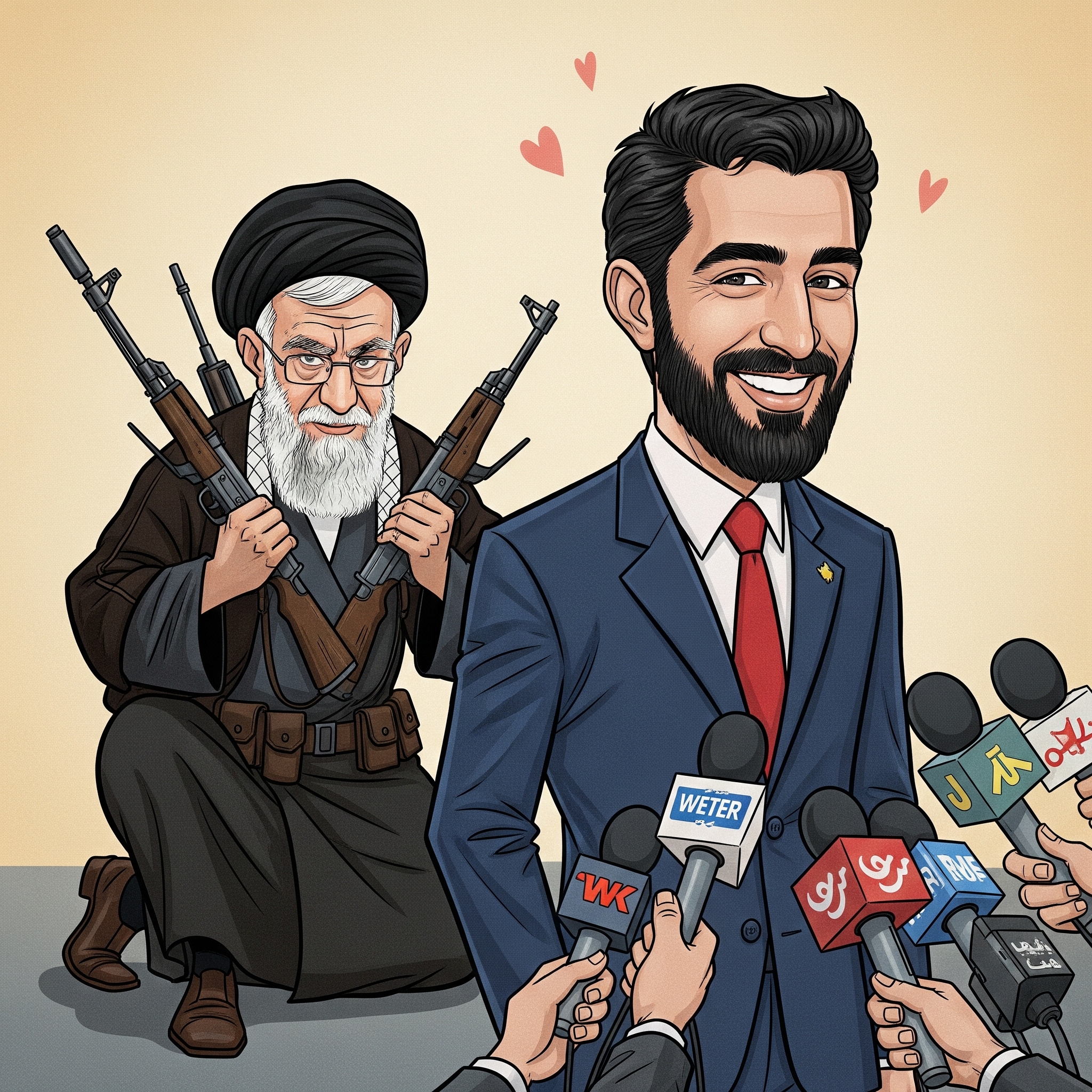
Let’s dispense with the charade. The useful idiots chanting in Western streets, clueless about the Arab-Israeli conflict’s history or the geography of the Levant, are not the real danger. The Islamist political leaders in Turkey, the Gulf, and Iran, along with their fellow travelers in the West, know exactly what they’re saying. Their code is unmistakable: an anti-Western, barbaric ideology that exalts Islamist supremacy above all else—above liberty, truth, or human life. The Ayatollahs in Iran and their proxies, from Hamas to Hezbollah, are blunt about their aim: a world Judenrein, cleansed of Jews.

Their Western apologists, like Columbia University protest leader Mahmoud Khalil, are cagier. Pressed for specifics, they dodge. When CNN asked Khalil if he supports Hamas, he pivoted, proclaiming opposition to all civilian deaths. It’s a sleight of hand, equating the IDF’s painstaking efforts to spare non-combatants with the deliberate savagery of Iran-backed terrorists who embed themselves in schools, hospitals, and mosques, who disrupt aid to starve their own people, who target civilians as a matter of policy.

This moral blurring is no accident. It’s a tactic to obscure the truth: anti-Zionists like Mamdani and Khalil aren’t fighting for Palestinian rights or equality. Their aim is singular—to strip safety and rights from one group: Jews. They cloak their agenda in the language of justice, but their selective fury betrays them. Why else hijack the term “genocide,” a word seared into Jewish consciousness by the Nazi extermination machine? No other people in modern history have faced such a systematic program of annihilation. Yet, in the hands of these amoral moralizers, “genocide” becomes a weapon to libel Israel and the West while absolving the true heirs of Nazism: the Islamists of Gaza, Judea and Samaria, Lebanon, Iraq, Yemen, and Iran.

So while I cringe at the antisemitic rhetoric filling the news cycles and social media threads, it is the relentless commitment to violence that keeps me awake at night. Hamas and Islamic Jihad could end the war in Gaza tomorrow by laying down their arms and releasing their hostages. Instead, they choose to prolong suffering, sacrificing their own people to glorify a genocidal ideology. Their defenders in the West, whether through ignorance or malice, amplify this madness. They scream about Israel’s “disproportionate” response while ignoring the rockets raining on Tel Aviv, the tunnels built to slaughter, the captives languishing in Gaza’s depths. They demand ceasefires but never call for Hamas to surrender. Why? Because their goal isn’t peace—it’s Israel’s erasure – and by extension, our own.
1 Comment

Filed under Foreign Policy, Terrorism, Uncategorized

A call for vigilance

The dust has barely settled from Operation Midnight Hammer, the audacious U.S. strike on Iran’s nuclear facilities at Fordow, Natanz, and Isfahan, and already the airwaves are thick with speculation and spin. Anti-Trump pundits and a cadre of biased reporters have seized on a leaked, low-confidence DIA analysis claiming the strikes merely delayed Iran’s nuclear ambitions by a few months. This narrative, gleefully amplified by those eager to undermine the operation’s success, misses the forest for the trees. The combined American-Israeli assaults likely obliterated key components of Iran’s nuclear infrastructure—burying fissile material and crippling advanced equipment. Yet, the real questions linger: Did Iran spirit away critical materials in the days before the strike, as reports of trucks fleeing Fordow suggest? And does the regime maintain secret facilities, hidden from the world’s prying eyes? For two decades, Iran’s playbook has been one of deception—obfuscating, denying, and only admitting the truth when cornered. We cannot afford to assume the threat is neutralized.

Even if we entertain the best-case scenario—that Operation Midnight Hammer dismantled every immediate nuclear threat—the reprieve is temporary. The Islamist regime in Tehran, driven by fanatical ideologues, is not swayed by the rational incentives that guide civilized nations. The mullahs’ obsession with a apocalyptic vision of Shiite domination overrides any concern for their own people’s suffering or the catastrophic consequences of their actions. When President Trump speaks of peace and economic prosperity in the region, his words fall on deaf ears in Tehran. These are not leaders who negotiate in good faith; they are zealots who justify oppression, terror, and reckless brinkmanship to achieve their twisted goals. A fanatic who wants you dead cannot be reasoned with, no matter the carrots or sticks you wave.

This grim reality demands a singular response: unrelenting vigilance. U.S. and Israeli intelligence must operate with razor-sharp precision, monitoring every move Iran and its proxies—Hamas, Hezbollah, the Houthis, and Iraqi militias—make. International oversight, often hampered by bureaucracy and political cowardice, cannot be trusted to keep Iran’s ambitions in check. Every step toward rebuilding their nuclear or ballistic missile programs must be met with swift, decisive countermeasures. “Maximum pressure” isn’t just a catchphrase; it’s a necessity—economically, diplomatically, and, when required, militarily. The Ayatollah and his proxies must face immediate consequences for any attack, threatened or actual, on American or Israeli interests. Whether it’s a rocket from Gaza, a drone from Yemen, or a cyberattack from Tehran, the response must be overwhelming and unambiguous.

The stakes could not be higher. Iran’s regime has made no secret of its hatred for the West, particularly the United States and Israel. Jews, Israelis, and the symbols of their communities—synagogues, cultural centers, even civilians—are prime targets for a regime that thrives on scapegoating and destruction. The proxies Iran funds and arms are not merely regional nuisances; they are extensions of Tehran’s malevolent reach, designed to destabilize and terrorize. Hezbollah’s arsenal in Lebanon, Hamas’s tunnels in Gaza, and Houthi attacks on Red Sea shipping lanes are all threads in the same web, spun by a regime that sees chaos as a path to power.

As dire as the situation is, one can envision a path to lasting security. The ultimate solution—dismantling Iran’s brutal Islamist regime—cannot be imposed from the outside. The ghosts of Afghanistan, Iraq, and Libya haunt us, reminding us that regime change orchestrated by foreign powers often breeds more instability than it resolves. The Iranian people, however, crushed under the weight of their oppressors, can and must find their own way to overthrow the mullahs and restore a government that values human dignity over ideological fanaticism. Only then can the West lower its guard and realize a future where Iran is a partner, not a pariah.

Until that day, we have no choice but to remain resolute. The risk of attack from Iran and its proxies is not a hypothetical—it is a clear and present danger to Western interests, to innocent civilians, and to the very ideals of freedom and coexistence. We must act with clarity, strength, and an unwavering commitment to defending our people and our values. The mullahs may dream of domination, but we will not let their nightmares become our reality.

Leave a comment

Filed under Uncategorized

Time to tackle the fires burning now

Our free society stands at a crossroads, besieged by real and present dangers that demand decisive action, not hand-wringing over hypotheticals or endless debates about future risks. Yesterday’s U.S. bombing of Iran’s nuclear facilities under President Donald Trump’s leadership is a prime example of confronting a clear and immediate threat head-on, rather than dithering over speculative consequences. Yet, predictably, the usual chorus of naysayers—Democrats, establishment elites, and globalist apologists—are clutching their pearls, fretting about oil markets, constitutional nuances, or Iran’s potential retaliation. This obsession with theoretical problems while ignoring fires burning now is a pattern we’ve seen before, and it’s time to call it out.

Let’s start with a familiar case: the environmental disaster in East Palestine, Ohio. When a train derailment unleashed toxic chemicals into a small American community, liberals were quick to pivot to their favorite talking point—climate change. They’d rather pontificate about carbon emissions in 2050 than address the immediate harm to real people breathing poisoned air today. Meanwhile, President Trump and Vice President JD Vance didn’t hesitate. They visited East Palestine, met with affected residents, and pushed for accountability, cleanup, and now attention to lingering health issues. That’s leadership—focusing on the tangible suffering of Americans now, not some abstract model of future doom.

The same misguided focus plagues economic discussions. Conventional thinkers hyperventilate about Trump’s tariffs-first strategy in trade negotiations with China, warning of inflation or market disruptions. They’re so busy crunching numbers on hypothetical economic models that they miss the real threat: China’s stranglehold on critical supply chains. From pharmaceuticals to rare earth minerals, Beijing holds leverage that could cripple our economy and security overnight. Trump’s approach—using tariffs to force China to the table and to stimulate domestic resilience —addresses this immediate vulnerability. It’s about protecting America’s sovereignty today, not fretting over what Wall Street’s spreadsheets predict for tomorrow.

Then there’s the border crisis. Democrats wring their hands over the fate of millions of illegal immigrants who flooded across our borders during the Biden administration’s lax enforcement. They cry about “humanitarian concerns” while ignoring the chaos unfolding in our cities. Rioters clog our streets, gang members infiltrate our communities, and unvetted terror suspects—potential sleeper cells—slip through unchecked. These are not hypotheticals; they’re happening now. Contrast this with Trump’s no-nonsense policies: a sealed border, ICE detentions of criminal aliens, and the “remain in Mexico” policy that help keep asylum seekers from overwhelming our system. These measures tackle the immediate dangers to our safety and sovereignty, not some utopian vision of open borders that ignores the consequences.

Now, we see the same pattern with the U.S. strikes on Iran’s nuclear facilities at Fordow, Natanz, and Isfahan. Yesterday Trump announced that B-2 stealth bombers and Navy submarines delivered a “spectacular military success,” obliterating key sites in Iran’s nuclear program. This wasn’t a reckless act but a calculated response to a clear and present danger. For over four decades, Iran has been at war with us—sponsoring terrorism, killing American servicemen, and maiming civilians with roadside bombs. Their nuclear program, despite Tehran’s claims of peaceful intent, has long been a ticking time bomb, with facilities like Fordow buried deep to evade attack and enriched uranium nearing weapons-grade levels.

Yet, what do Democrats do? They fret about oil prices spiking if Iran closes the Strait of Hormuz, or they nitpick over whether Trump sought enough congressional approval. They worry about Iran’s “right to self-defense” or the “everlasting consequences” of escalation, as if Iran hasn’t been escalating against us since 1979. Senate Minority Leader Chuck Schumer and House Minority Leader Hakeem Jeffries cry foul, claiming Trump misled the country or violated the War Powers Act. Meanwhile, Iran’s Foreign Minister Abbas Araghchi vows retaliation, conveniently ignoring that his regime has been attacking us through proxies for years. This hand-wringing over hypothetical fallout—oil shocks, diplomatic slights, or Iran’s next move—misses the point: Iran’s nuclear capability was a fire burning now, and Trump put it out.

The critics’ obsession with future risks ignores the reality of Iran’s actions. Over 450 missiles have been fired at Israel since the conflict intensified, and Iran’s proxies, like Hezbollah and the Houthis, have targeted U.S. interests repeatedly. Trump’s strikes, using 14 GBU-57 Massive Ordnance Penetrators and over 30 Tomahawk missiles, targeted the heart of Iran’s nuclear ambitions—facilities designed to produce weapons that could hold the world hostage. Satellite imagery shows craters and debris at Fordow and Natanz, confirming severe damage. Israel’s Prime Minister Benjamin Netanyahu hailed the strikes as historic, and even Israeli opposition leaders agreed they were necessary for global security.

The bottom line is this: leadership means tackling the fires burning now, not debating fire codes for a blaze that might never come. Iran’s nuclear program was a clear and present danger, not a hypothetical. Trump’s decision, backed by Vice President Vance, Secretary of State Marco Rubio, and Defense Secretary Pete Hegseth, prioritized America’s safety and that of our allies. As Vance said, the strikes were a “narrow and limited approach” to set back Iran’s nuclear ambitions by years, not a prelude to endless war.

The naysayers will keep wringing their hands, warning of oil shocks or Iranian reprisals. But what’s the alternative? Letting Iran, the world’s leading state sponsor of terror, inch closer to a nuclear bomb? That’s not leadership; it’s cowardice. Just as Trump and Vance addressed the East Palestine disaster, confronted China’s supply chain dominance, and secured our borders, they’ve now taken bold action against Iran’s nuclear threat. Our leaders must focus on the dangers staring us in the face—rioters, gang members, terror suspects, and rogue regimes—before they consume us. The time for action is now, not when the flames are at our doorstep.

4 Comments

Filed under Uncategorized

Obama negotiates against himself

HT_twitter_obama_rouhani_lpl_130927_16x9_992

Recent developments in the negotiations over Iran’s nuclear program have shined bright light on the weakness of President Obama’s strategy.

Genuinely or not, Iran has disavowed the most critical provision cited by the president and his minions in their defense of the framework agreement. In an official statement, Iran’s Ayatollah Ali Khamenei insisted that Iran would honor no agreement which failed to remove economic sanctions immediately. Then on Twitter he underscored the issue, declaring “all sanctions should be removed just when the deal is reached.”

Gradual relief upon proof of compliance had been a primary selling point to Western audiences. Critics had worried that Iran would feign compliance to earn sanctions relief, not that it could obtain relief with mere promises. Now it seems the bad deal is even worse than advertised.

On April 7 in The Wall Street Journal, former Secretaries of State Henry Kissinger and George Shultz took the administration to task for its shortsightedness. Pushing back on their thoughtful analysis, State Department spokeswoman Marie Harf complained she “didn’t hear a lot of alternatives of what they would do differently.”

This retort was non-substantive and essentially false. The statesmen had meticulously advocated for a more coherent regional strategy, including a firmer line against the Iranian regime.

Beyond Harf’s petulance, though, it is worth noting that you don’t hear anyone on the Iranian side talking about the lack of alternatives. Unlike our hapless American president, the Iranians drive a hard bargain because they choose not to negotiate against themselves.

Call it “good cop/bad cop” or “Negotiation 101,” but it is just common sense to posit an alternative which your adversary fears, not one that you and your allies wish to avoid.

President Obama is so fearful of losing a deal that he is fighting to disarm the very people who could give him the most leverage: his skeptics in the U.S. Congress. If he were to embrace Congressional oversight, he could actually use it as a battering ram to gain concessions at the bargaining table.

Imagine a counterfactual, but plausible scenario:

– [Iranian negotiator Mohammad Javad] Zarif: We cannot allow inspections of our military sites.

– Kerry: I understand the sensitivity, but I won’t be able to sell a deal back home without it.

– Zarif: We have our own political constraints.

– Kerry: With all due respect, my boss is no “supreme leader.” He cannot impose an agreement against the wishes of our people’s representatives. You’ve got more flexibility. Now do you want this deal or don’t you?

Instead of this exchange, we have the charade of President Obama trying to explain to us that Khamenei does not mean what he says. “Even a guy with the title ‘Supreme Leader’ has to be concerned about his own constituencies,” Obama told reporters on April 11 at the Americas summit in Panama.

If anyone has his own constituents to placate, it is the popularly elected leader of a democratic republic, and yet Obama seems to think the principle does not apply to himself.  Until lawmakers substantially watered it down, he threatened to veto pending bipartisan legislation which imposes Congressional review on the prospective deal.

When one side argues that a better deal is not possible, it becomes a self-fulfilling prophecy. Negotiation of a better deal in fact becomes impossible because the other side feels no incentive to compromise.

We have heard this record played before, also when Israel’s vital interests hung in the balance. In his first term, Obama broke with his predecessors by publicly demanding a total freeze of Jewish construction beyond pre-1967 borders — and then declaring those borders the starting point for a negotiated settlement with the Palestinians. While a final peace deal would certainly use these borders as a guidepost, the president undermined any leverage Israel had to preserve its claims beyond the Green Line.

Of course, Abu Mazen was not going to take a less aggressive position than his American interlocutor. And when Prime Minister Netanyahu predictably objected, talks with the Palestinians hit a stalemate from which there has been no meaningful reprieve — even with the concentrated attention of Secretary of State Kerry over the past two years.

Why would the Iranians behave any different from the Palestinians? Obama has given Iran the opening it needs to preserve its nuclear weapons program or, short of that, to undermine the coordinated effort which has until now hemmed it in.

Leave a comment

Filed under Foreign Policy

Obama can’t be trusted on Iran

iran-nuclear-weapons-1

Leaders in Washington are grappling with what is arguably the most important foreign policy challenge of our time — how to stop Iran from obtaining a nuclear weapon.

Why are the stakes so high?  For one, Iran is a troublemaker.  As a geopolitical strategy to spread its brand of theocratic domination, it is actively destabilizing countries and sponsoring terror.  Its forces and proxies have caused havoc across the Middle East and murdered civilians on every continent.  Its weapons have killed our soldiers in Iraq and Afghanistan.  In 2011 Iranian agents even tried to commit violence in our nation’s capital.  Lacking a nuclear capacity today, the Islamic Republic largely goes unchecked.  With a bomb to back it up, the rogue behavior would only get worse.

To be sure, Israel has got a problem with this picture.  Not only does Iran funnel arms and resources to Hezbollah and Hamas, but its leadership threatens the Jewish state directly with annihilation (on Twitter no less).  What’s even scarier is the likely reaction of the Arab world to Iranian nuclearization.  To counter Iran, Sunni rivals from North Africa to the Persian Gulf would quickly embark on weapons programs of their own.  Proliferation would explode in the world’s most volatile region, raising the likelihood of nuclear warfare.

Negotiations are underway to reverse course.  Every sensible American hopes that diplomacy can succeed and obviate the need for military action to combat the threat.  Critics may be skeptical of Prime Minister Netanyahu’s motivations, but few could argue he prefers a military solution.  Israel is on the front lines. Whether or not it were to lead a military strike, Israel would surely bear the brunt of an Iranian response.  For the same reasons, Israel has more skin in the game.  It has the most to lose in this poker match.  It can only support a negotiated agreement that genuinely reduces the risk of a nuclear Iran.

Herein lies the source of the political drama playing out in Washington this week.  Because Israel does not have a seat at the table, it is relying on the so-called “P5+1” to negotiate a “good deal.”   Netanyahu ruffled White House feathers by accepting the Republican-led invitation to speak to a joint session of Congress.  He spoke passionately to a receptive audience because neither he nor the majority of our lawmakers trust the administration to get it right.  Pundits have mistakenly focused on the personal tensions between Obama and Netanyahu, with many blaming the prime minister for inserting partisanship into the alliance.  In reality, relations would not be so strained had this administration not lost the confidence of our allies around the globe.  Israel is struggling to work with this president because this president’s word does not count when it matters most.

Obama and his defenders protest that it is Netanyahu who has lost credibility.  They cite the prime minister’s resistance to the interim “Joint Plan of Action,” without which there would be no brakes on Iranian enrichment activities.  They bristle at Netanyahu’s criticisms because they think he has offered no viable alternative to military action.  They hasten to remind everyone how much the administration has provided security assistance and defense of Israel against biased U.N. resolutions.

These objections might hold some water if we could believe the administration knew what it was doing, would stand firm when the going got tough, and would not substitute wishful thinking for sound strategic assessment.

But on all these counts Obama fails to deliver.  I’ve written before how the White House is flailing in matters of national security.  Obama sees the world as he wishes it would be rather than how it is.  His commitments he subordinates to his political calculations and his aspirations for a legacy as the president who ended wars and avoided new conflicts.

On Monday night, National Security Advisor Susan Rice addressed 16,000 delegates at the annual AIPAC Policy Conference in Washington.  “We have Israel’s back,” she declared, “come hell or high water.”  About Iran she added, “a bad deal is worse than no deal.  And if that is the choice then there will be no deal.”  These are comforting sentiments, but it’s far from clear that anyone with a sober understanding of Iranian aggression and deception would share the administration’s view of a good deal.  And, while Ambassador Rice speaks with sincerity, it’s hard to trust that her boss won’t yet again hang her out to dry.  You only have to consider her comments about the attacks on our consulate in Benghazi and the “honor and distinction” of Sgt. Bowe Bergdahl to realize how little we can trust her representations.

On Friday Senate Foreign Relations Chairman Bob Corker (R-TN), together with eleven bipartisan co-sponsors, introduced the Iran Nuclear Agreement Review Act of 2015, which asserts Congressional prerogatives to review any prospective agreement with Iran over its nuclear program.  President Obama objects.  Apparently, even he doesn’t trust his capacity to deliver.  His threat to veto the bill tells you everything you need to know about the value of this deal.

2 Comments

Filed under Foreign Policy