Let the money flow

money-pipe-end-the-fed

For as long as people have been running for office, critics have bemoaned the corrosive influence of money in politics. For years these self-appointed reformers have pressed the strong arm of government to limit who can spend what to advance a political objective.

One of the bigger reform movements of the past generation culminated in the Bipartisan Campaign Reform Act of 2002 or “BCRA.” Spearheaded by Senators John McCain (R-AZ) and Russ Feingold (D-WI), BCRA (also known as “McCain-Feingold”) tightened constraints on spending, especially outside of formal campaign infrastructure. McCain made the reform effort a signature issue and has worn it as a badge of honor ever since.

A number of legal challenges have since chipped away at the restrictions of BCRA, leaving McCain and other advocates increasingly demoralized. In particular, ruling in Citizens United vs. Federal Election Commission, the Supreme Court struck down certain limits on spending by corporations and unions. The 2010 decision helped spawn the proliferation of so-called “SuperPAC” organizations, which can raise unlimited funds for the purposes of making independent political expenditures.

McCain was dumbfounded. “[T]he system is broken,” he griped to NBC’s “Meet the Press.” “I predict to you there will be scandals.”

And scandals there will surely be, as there have been in nearly in every political administration.

But is the free flow of money really to blame? How did it become an article of faith that more spending makes our political culture dirtier than before?

Put aside that every attempt to regulate political spending turns into a game of “whack-a-mole.” Campaign professionals always find a way to skirt the rules and satisfy the demand to spend money.

Perhaps it’s worth considering instead whether our founders had a good idea when they enshrined the right of free expression in the Constitution. What is a greater menace to our democratic culture: individuals and organizations competing freely with resources of their own choosing, or a bureaucracy enforcing arbitrary boundaries with criminal penalties?

Would-be protectors of our society fret that President Obama raised $1.1 billion to get reelected in 2012, and that leading candidates for 2016 will go even higher. Total political spending in 2012 probably topped $5.8 billion. This may seem like a lot until you realize that the automotive industry spent over $14 billion advertising in the U.S. last year alone. Shouldn’t the selection of our political leaders and public policy warrant marketing dollars at least as sizeable as those for the newest Toyota Tundra?

What campaign finance warriors really object to is not the volume of money in politics. What really grates at them is the ability of wealthy donors to spend their own money as they see fit.

Launching his campaign for president late last month, the self-declared socialist Bernie Sanders summed it up well. “The country belongs to all of us and not just the billionaire class,” he told a meeting of reporters and editors at Bloomberg. It doesn’t seem to matter that politically active billionaires span the political spectrum, including Sheldon Adelson and the Koch brothers on the right, and Tom Steyer and George Soros on the left.

When you pick apart the money in politics critique, it sounds a lot like the misguided FCC policy calling for “Equal Time” in broadcasting. In today’s multifaceted, highly competitive and fragmented news content marketplace, it doesn’t really matter if a broadcaster favors a political faction. Disaffected citizens can turn to alternative networks, talk radio, online publishers, social media, and more.

Likewise, it doesn’t silence debate when a billionaire backs a pet cause or candidate. How many millions did Michael Bloomberg spend fruitlessly to back gun control candidates in Colorado? How much did Sheldon Adelson’s multimillion dollar support for Newt Gingrich derail Mitt Romney’s campaign for the GOP presidential nomination? What about Tom Steyer’s NextGen Climate efforts in the 2014 mid-term election campaign?

The simple truth is that big spending adds color, content, and energy to our political culture. It opens doors to political messages and candidates that might otherwise go unnoticed. When 20 or more candidates are legitimately competing for the GOP nomination in 2016, we can thank generous wealthy donors and their SuperPACs for our wide array of choices. If there is any hope of a candidate rising to challenge Hillary Clinton on the Democratic side, it will also depend on a few big-spending sponsors.

A free society depends on more liberty not less. Those who would handcuff political speech in the name of a level playing field are no different than those who push for taxes and subsidies to advance a favored industry. The only ones who benefit from government limits on campaign spending are incumbents and entrenched special interests. As long as funding is transparent, we should let it flow.
Leave a comment

Filed under Domestic Policy, Electoral Politics

Obama negotiates against himself

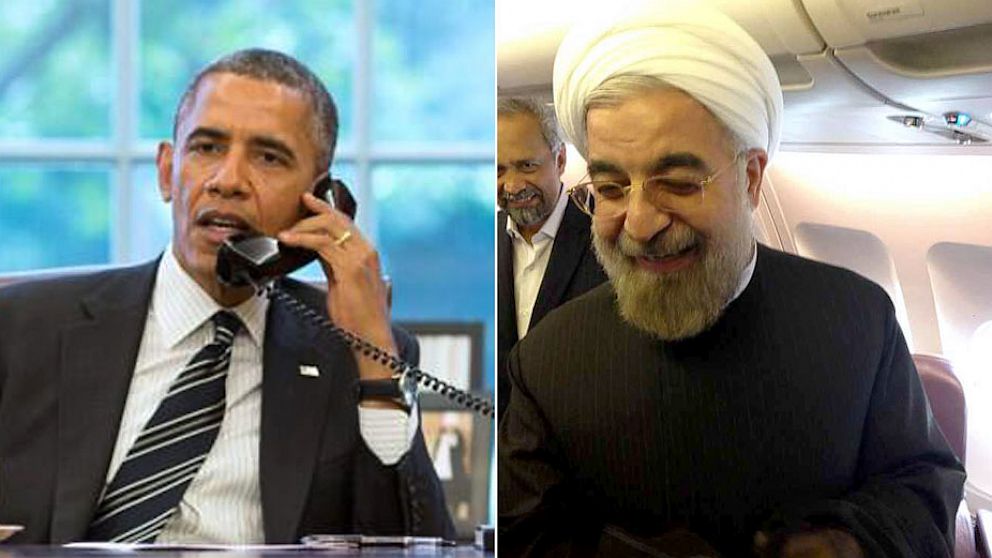
HT_twitter_obama_rouhani_lpl_130927_16x9_992

Recent developments in the negotiations over Iran’s nuclear program have shined bright light on the weakness of President Obama’s strategy.

Genuinely or not, Iran has disavowed the most critical provision cited by the president and his minions in their defense of the framework agreement. In an official statement, Iran’s Ayatollah Ali Khamenei insisted that Iran would honor no agreement which failed to remove economic sanctions immediately. Then on Twitter he underscored the issue, declaring “all sanctions should be removed just when the deal is reached.”

Gradual relief upon proof of compliance had been a primary selling point to Western audiences. Critics had worried that Iran would feign compliance to earn sanctions relief, not that it could obtain relief with mere promises. Now it seems the bad deal is even worse than advertised.

On April 7 in The Wall Street Journal, former Secretaries of State Henry Kissinger and George Shultz took the administration to task for its shortsightedness. Pushing back on their thoughtful analysis, State Department spokeswoman Marie Harf complained she “didn’t hear a lot of alternatives of what they would do differently.”

This retort was non-substantive and essentially false. The statesmen had meticulously advocated for a more coherent regional strategy, including a firmer line against the Iranian regime.

Beyond Harf’s petulance, though, it is worth noting that you don’t hear anyone on the Iranian side talking about the lack of alternatives. Unlike our hapless American president, the Iranians drive a hard bargain because they choose not to negotiate against themselves.

Call it “good cop/bad cop” or “Negotiation 101,” but it is just common sense to posit an alternative which your adversary fears, not one that you and your allies wish to avoid.

President Obama is so fearful of losing a deal that he is fighting to disarm the very people who could give him the most leverage: his skeptics in the U.S. Congress. If he were to embrace Congressional oversight, he could actually use it as a battering ram to gain concessions at the bargaining table.

Imagine a counterfactual, but plausible scenario:

– [Iranian negotiator Mohammad Javad] Zarif: We cannot allow inspections of our military sites.

– Kerry: I understand the sensitivity, but I won’t be able to sell a deal back home without it.

– Zarif: We have our own political constraints.

– Kerry: With all due respect, my boss is no “supreme leader.” He cannot impose an agreement against the wishes of our people’s representatives. You’ve got more flexibility. Now do you want this deal or don’t you?

Instead of this exchange, we have the charade of President Obama trying to explain to us that Khamenei does not mean what he says. “Even a guy with the title ‘Supreme Leader’ has to be concerned about his own constituencies,” Obama told reporters on April 11 at the Americas summit in Panama.

If anyone has his own constituents to placate, it is the popularly elected leader of a democratic republic, and yet Obama seems to think the principle does not apply to himself.  Until lawmakers substantially watered it down, he threatened to veto pending bipartisan legislation which imposes Congressional review on the prospective deal.

When one side argues that a better deal is not possible, it becomes a self-fulfilling prophecy. Negotiation of a better deal in fact becomes impossible because the other side feels no incentive to compromise.

We have heard this record played before, also when Israel’s vital interests hung in the balance. In his first term, Obama broke with his predecessors by publicly demanding a total freeze of Jewish construction beyond pre-1967 borders — and then declaring those borders the starting point for a negotiated settlement with the Palestinians. While a final peace deal would certainly use these borders as a guidepost, the president undermined any leverage Israel had to preserve its claims beyond the Green Line.

Of course, Abu Mazen was not going to take a less aggressive position than his American interlocutor. And when Prime Minister Netanyahu predictably objected, talks with the Palestinians hit a stalemate from which there has been no meaningful reprieve — even with the concentrated attention of Secretary of State Kerry over the past two years.

Why would the Iranians behave any different from the Palestinians? Obama has given Iran the opening it needs to preserve its nuclear weapons program or, short of that, to undermine the coordinated effort which has until now hemmed it in.

Leave a comment

Filed under Foreign Policy

Admit mistakes to earn trust

http://www.jpost.com/Opinion/Admit-mistakes-to-earn-trust-396477

Leave a comment

Filed under Electoral Politics, Public Relations

No apologies for economic liberty

http://www.jpost.com/Opinion/No-apologies-for-economic-liberty-394986

Leave a comment

Filed under Economic Policy, Electoral Politics

The powerful impact of theater

http://www.jpost.com/Opinion/The-powerful-impact-of-theater-393777

Leave a comment

Filed under Electoral Politics

Why Obama won’t (or can’t) protect us

obama

What is President Obama thinking?

Both supporters and detractors of the president struggle to rationalize his approach to the threat of global jihad. Why can’t he call it what it is? Why does he discount the religious underpinnings of Islamist terror? Why does he lecture the American people about the “root causes” of “violent extremism?”

The answers matter because the West is losing ground in this battle. While the U.S. government fails to orchestrate — or even articulate — a coherent strategy to combat the followers of radical Islam, their population, political power, and capacity to harm us surge.

The simplistic explanation is that President Obama, like President Bush before him, fears alienating the millions of Muslims who forswear violence. He uses politically correct language to avoid adding fuel to the fire. Were this the only rationale, we might take comfort that he understands the crux of the problem. We might assume he is choosing his language as a calculated tactic.

Obama’s choice of language is more than rhetoric, however. He really seems to believe what he is saying. And initially, at least, we might have attributed such naiveté to his personal history. After all, the president can claim little “real-world” experience outside of politics. A community organizer and college professor before entering public life, he never had to manage a large organization or meet a payroll, let alone address matters of national security.

The record reflects as much. Since he came into office, Obama has presided over geopolitical disasters across the Middle East and elsewhere around the globe. Yet none of these failures appears to have chastened him. Surrounding himself with loyalists, the president presses on with a doctrine of vague declarations and non-intervention, unbothered by the diminished credibility of America among both allies and adversaries. So something deeper must be at play in the president’s political philosophy.

It comes down to ideology. Barack Obama is a product of the progressive movement and its champions in liberal academia. This community embraces a rigid view of the human condition, where race, wealth, and power engender social divisions and perpetuate oppression of the weak. In its paradigm, most conflict, poverty, and social dislocation result from avaricious capitalist and corporate interests. Only enlightened governments and intergovernmental institutions can restrain these interests and rectify the imbalance.

There’s no room in the progressive model for baser pathologies such as tribal enmity or the medieval barbarism of the Islamic State. Progressive thinkers simply deny or overlook historic events and present-day behaviors which fail to align with the patterns of race and class warfare they deem universal. For this reason, activists in the 1980’s raged over the racial injustice of Apartheid South Africa while completely ignoring the vicious brutality of the African National Congress and of black-ruled regimes in neighboring Zimbabwe, Mozambique, and Angola. It’s why the supposedly liberal advocates for Palestinian independence today pay no mind to the illiberal treatment of journalists, Christians, women, and gays in the Palestinian territories.

Viewed in this light, it’s not surprising to hear President Obama and his team focus on the economic deprivation across Muslim societies, as if a jobs program would stem the tide of radical Islam. President Obama may not “blame America first” as his most ardent critics assert, but he eschews the notion of American exceptionalism. At the National Prayer Breakfast last month, he admonished Americans and Christians, “lest we get on our high horse… remember that during the Crusades and the Inquisition, people committed terrible deeds in the name of Christ.” As far as he is concerned, the moral deficiencies of Muslim and Arab societies are not materially different from the imperfections of Western societies.

If we are all one imperfect world laboring under universal burdens of sin, then of course there is no point in singling out radical Islam. To combat our enemies, we must combat ourselves and do penance for our own failures. In Obama’s warped alternative reality, NATO defense of Eastern Europe is the source of resurgent Russian aggression, global warming is the most urgent threat to humanity, high unemployment in French suburbs is the “root cause” of anti-Semitic rampages, and Jewish settlements in the West Bank are the obstacle to Middle East peace.

President Obama never truly concealed this radical mindset during his pursuit of the White House. He was mentored by the likes of Bill Ayers and Jeremiah Wright. Their ideas were on clear display for anyone who chose to look closely. With two years left on the president’s term and critical military and security policies still in flux, the public should wisen up to a fearful reality. The man charged with leadership of the free world is not equipped to address the clear and present dangers to our civilization.

3 Comments

Filed under Foreign Policy, Terrorism

Obama can’t be trusted on Iran

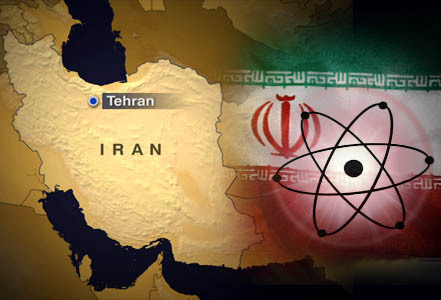
iran-nuclear-weapons-1

Leaders in Washington are grappling with what is arguably the most important foreign policy challenge of our time — how to stop Iran from obtaining a nuclear weapon.

Why are the stakes so high?  For one, Iran is a troublemaker.  As a geopolitical strategy to spread its brand of theocratic domination, it is actively destabilizing countries and sponsoring terror.  Its forces and proxies have caused havoc across the Middle East and murdered civilians on every continent.  Its weapons have killed our soldiers in Iraq and Afghanistan.  In 2011 Iranian agents even tried to commit violence in our nation’s capital.  Lacking a nuclear capacity today, the Islamic Republic largely goes unchecked.  With a bomb to back it up, the rogue behavior would only get worse.

To be sure, Israel has got a problem with this picture.  Not only does Iran funnel arms and resources to Hezbollah and Hamas, but its leadership threatens the Jewish state directly with annihilation (on Twitter no less).  What’s even scarier is the likely reaction of the Arab world to Iranian nuclearization.  To counter Iran, Sunni rivals from North Africa to the Persian Gulf would quickly embark on weapons programs of their own.  Proliferation would explode in the world’s most volatile region, raising the likelihood of nuclear warfare.

Negotiations are underway to reverse course.  Every sensible American hopes that diplomacy can succeed and obviate the need for military action to combat the threat.  Critics may be skeptical of Prime Minister Netanyahu’s motivations, but few could argue he prefers a military solution.  Israel is on the front lines. Whether or not it were to lead a military strike, Israel would surely bear the brunt of an Iranian response.  For the same reasons, Israel has more skin in the game.  It has the most to lose in this poker match.  It can only support a negotiated agreement that genuinely reduces the risk of a nuclear Iran.

Herein lies the source of the political drama playing out in Washington this week.  Because Israel does not have a seat at the table, it is relying on the so-called “P5+1” to negotiate a “good deal.”   Netanyahu ruffled White House feathers by accepting the Republican-led invitation to speak to a joint session of Congress.  He spoke passionately to a receptive audience because neither he nor the majority of our lawmakers trust the administration to get it right.  Pundits have mistakenly focused on the personal tensions between Obama and Netanyahu, with many blaming the prime minister for inserting partisanship into the alliance.  In reality, relations would not be so strained had this administration not lost the confidence of our allies around the globe.  Israel is struggling to work with this president because this president’s word does not count when it matters most.

Obama and his defenders protest that it is Netanyahu who has lost credibility.  They cite the prime minister’s resistance to the interim “Joint Plan of Action,” without which there would be no brakes on Iranian enrichment activities.  They bristle at Netanyahu’s criticisms because they think he has offered no viable alternative to military action.  They hasten to remind everyone how much the administration has provided security assistance and defense of Israel against biased U.N. resolutions.

These objections might hold some water if we could believe the administration knew what it was doing, would stand firm when the going got tough, and would not substitute wishful thinking for sound strategic assessment.

But on all these counts Obama fails to deliver.  I’ve written before how the White House is flailing in matters of national security.  Obama sees the world as he wishes it would be rather than how it is.  His commitments he subordinates to his political calculations and his aspirations for a legacy as the president who ended wars and avoided new conflicts.

On Monday night, National Security Advisor Susan Rice addressed 16,000 delegates at the annual AIPAC Policy Conference in Washington.  “We have Israel’s back,” she declared, “come hell or high water.”  About Iran she added, “a bad deal is worse than no deal.  And if that is the choice then there will be no deal.”  These are comforting sentiments, but it’s far from clear that anyone with a sober understanding of Iranian aggression and deception would share the administration’s view of a good deal.  And, while Ambassador Rice speaks with sincerity, it’s hard to trust that her boss won’t yet again hang her out to dry.  You only have to consider her comments about the attacks on our consulate in Benghazi and the “honor and distinction” of Sgt. Bowe Bergdahl to realize how little we can trust her representations.

On Friday Senate Foreign Relations Chairman Bob Corker (R-TN), together with eleven bipartisan co-sponsors, introduced the Iran Nuclear Agreement Review Act of 2015, which asserts Congressional prerogatives to review any prospective agreement with Iran over its nuclear program.  President Obama objects.  Apparently, even he doesn’t trust his capacity to deliver.  His threat to veto the bill tells you everything you need to know about the value of this deal.

2 Comments

Filed under Foreign Policy

The “Power of the Purse” Myth

170399473

As Republicans in Congress scramble today to piece together a bill funding the Department of Homeland Security, it’s worth reviewing how we got here.

Shortly after the 2014 mid-term elections, President Obama issued executive orders providing residency and work permits to millions of illegal immigrants.  Republicans and even a few Democrats objected to the actions as an unconstitutional application of executive authority.  Republicans wanted to fight back without stealing the thunder of their recent electoral triumph.  So they passed an omnibus “continuing resolution,” funding at current levels the entire federal bureaucracy — except for the DHS, which they funded through today’s date only.  The thinking was that, in the new year, with majorities in both houses of Congress, Republicans would be able to pressure the president into backing down from his “executive amnesty.”

We give the power brokers in Washington too much credit for their political calculations.  Why would anyone believe that President Obama, who had just led his party to a crushing defeat, could be cowered into backing down on a signature issue?  If anything, the President now has even less of an incentive to compromise.  He has no more elections of his own.  His party has taken as many lumps as it can.  Even fewer moderates survive in the Democratic caucus.  Politically speaking, there is nothing restricting the president from putting a foot on the accelerator of his agenda.

The Constitution does vest in the Congress power to appropriate funds from the treasury.  Technically, Congress can “defund” the administrative resources which the administration needs to “execute” objectionable executive orders.  Of course, “defund” in this context means to pass an appropriations bill with restrictions.  Even if such a measure were to garner enough bipartisan support to overcome a Senate filibuster, the president would have no compulsion to sign it.   Congress would not have enough votes to override a veto.  In short, we would find ourselves where we stand today — a looming “shutdown” of the department at issue.

Even if both sides are mechanically responsible for the impasse, public opinion lays the blame squarely on the party throwing up the initial roadblock — in this case, the GOP.  One can argue for principle above politics, but purity only gets you so far.  It’s easy for Rep. Steve King (R-IA) or Sen. Ted Cruz (R-TX) to hold the line because neither faces any credible political fallout from his actions.  Bucking compromise only burnishes their credentials with their constituencies.  For the conservative movement as a whole, however, it’s a losing proposition.  As Homeland Security staff are furloughed or forced to work without pay, it’s obvious where the pressure will begin to mount.  The party which prides itself on law and order issues will have no choice but to cave.  Notwithstanding claims to the contrary, the GOP was lucky to avoid punishment for the 2013 government shutdown.  If not for the disastrous roll-out of healthcare.gov and other blunders by the administration, mid-term election results would have looked very different.

This is not to say that conservatives have no cards to play in the battle over spending levels and priorities.  Options are simply more limited when we appropriate with omnibus bills that face little scrutiny or discussion.  There is a reason for “regular order” whereby the House Appropriations Committee and the Senate Committee on Appropriations divide their work into twelve subcommittees, each tasked with developing an appropriations bill for its own section of the government.  These subcommittees can hold hearings and publish proposals and dig into the details which other legislators lack the time or interest to investigate.  It’s in the deep and dirty work of these subcommittees where Republicans can parlay the privileges of their majority.  It’s there that fiscal conservatives can shine a light on waste or muscle through resolutions which advance priorities without the distraction of emotionally charged national debates largely unrelated to the subcommittee’s core business.

It’s not capitulating or shirking responsibility to forsake tactics which turn the tables on contentious issues.  Critics have good cause to resent the president’s overreach.  To be effective in opposition, however, they need to read the political tea leaves.  No good will come from a DHS shutdown.  Better to fight for restraint by the courts and, ultimately, for control of the White House.

1 Comment

Filed under Domestic Policy, Electoral Politics, Immigration

Dealing with el Diablo

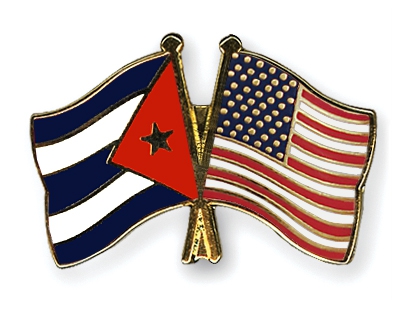
Flag-Pins-Cuba-USA

President Obama’s decision in December to restore diplomatic and eventually trade relations with Cuba has generated some unlikely alliances.

A few pragmatic-minded Republicans, such as Sen. Jeff Flake (R-AZ), agree that the 50-year-old trade embargo has accomplished very little.  Certainly, it hasn’t led to a meaningful change for the better, let alone the ouster of the Castro regime.

At the same time, Sen. Bob Menendez (D-NJ) has joined the majority of the Republican caucus in opposition to the president’s policy change, calling it a capitulation.  Even the Washington Post editorial board, hardly a regular critic of this administration, expressed its misgivings yesterday.  The island nation only 90 miles from our shores is no doubt a repressive state.  The Cuban government denies its people virtually every liberty we hold dear, arresting political dissidents and housing them in ghastly prisons, crushing independent media, and restricting movement and assembly of journalists and activists (among other egregious offenses).

But are human rights violations cause for economic retribution?  If so, it seems that not all violators are created equal.  What about the abuses in China?  In Vietnam?  In Saudi Arabia?  In Turkey?  According to Freedom House‘s accounting of political and civil liberties, some of our closer commercial and strategic partners rank near the bottom of the list.

Let’s face it.  If repressive governance disqualified a country from doing business with the U.S., we would be doing a lot less business in foreign markets.  Certainly there has to be something more than concern for human rights behind our persistent impasse with Cuba.

What about the country’s bad behavior beyond its borders?  For decades the Castro brothers have been notorious troublemakers from South America to Africa.  Then again, they don’t stand alone on this count either.  Despite a decade of destabilizing foreign intrigue by Hugo Chavez and his successor in Caracas, we continue to maintain full diplomatic relations with Venezuela, and U.S. trade with the nation totaled $64 billion in 2012.

In practice, every conflict is different.  Effective policy requires a lens of realism.  Sanctions against Apartheid South Africa were justified in retrospect because the leadership of the country wanted to reverse its international isolation.  And for better or for worse, our current sanctions regime against Iran does seem to have brought the ayatollahs to the nuclear arms bargaining table.  In contrast, Kim Jong-un cares little about North Korea’s seclusion and the economic deprivations of his people.  We should not be surprised when our threats and bribes do little to bring Pyongyang into compliance with the most rudimentary norms of international behavior.

So while it may not comport very well with lofty political rhetoric, it appears that U.S. economic pressure is really just a tactical instrument, to be deployed when it helps, and discarded when it doesn’t.

What’s needed today is a bit more candor and clarity about our positions and policies.  We should not mince words when it comes to critiquing behavior which undermines liberty or America’s vital strategic interests.  It does not follow, however, that we need a uniform strategy to contain it.

The question we should be asking about Cuba is not whether the regime is bad — it is.  And it’s not whether 50 years of embargo has worked — it hasn’t.  Instead we should be looking forward with an honest analysis of our options.  Will continued isolation of Cuba perpetuate the problems or will it finally precipitate a tipping point for change?

There are well-reasoned arguments on both sides, but neither seems to acknowledge the other.  It would be refreshing to hear President Obama disparage the Castro mystique that persists among his base of support.  It would also be more convincing to hear Sen. Marco Rubio (R-FL) critique the shortcomings of the Cuba embargo, even as he advocates keeping it in place.  On balance, we should take steps to normalize, but at a measured pace and with a close eye for proof that it’s making things better.

1 Comment

Filed under Foreign Policy, Human Rights, International

What is really beyond the pale?

speak-no-evil_design (1)

In the wake of the Charlie Hebdo massacre, many were quick to affirm the sanctity of free speech rights.  Je suis Charlie campaigners online and in the streets of Paris promoted the idea that people should be free to say whatever they wish.  Without legal sanction and without violent reprisals.

Not everyone signed on.  Conservative Muslims tempered the view that speech should be unfettered.  They cautioned that some speech is too offensive to be protected.

Americans by and large have sided with freedom.  While some have doubted where our president stands, most in our society have steadfastly disparaged the violent furor over cartoons that upset Muslim sensibilities.

But is the Western world intellectually consistent in its defense of free speech? Do we walk the walk when it comes to speech that offends our sensibilities? We’re all for “ridicule rights” so long as the target is a traditional religious point of view.  (I certainly haven’t noticed anyone among our political and cultural elite wagging a finger at the producers of the The Book of Mormon, the Broadway musical which mocks The Church of Jesus Christ of Latter Day Saints.)

How about something that counters liberal norms about race, gender, or sexual orientation? Or sacred historical memory of epic injustice, such as black slavery or the Holocaust?

In Europe there are laws forbidding denial of the Holocaust.  Europeans are in a particularly tough spot about resurgent antisemitism, and the more responsible political leaders among them understandably want to tamp it down.  It is certainly upsetting to observe neo-Nazi sentiments surfacing amidst radical political and Islamist movements.  As with so many other social and economic maladies, however, the Europeans rely too heavily on government solutions.  Constraints on speech in France eliminate discredited ideas about as well as constraints on commerce reduce their high levels of youth unemployment.

You’d be mistaken if you hoped to find relief in the sanctuary of a college campus.  The Free Speech Movement may have originated at UC Berkeley 50 years ago, but that university long ago sacrificed its integrity on the altar of political correctness.  Nationally recognized speakers at Cal who fail to toe the politically correct line have been “disinvited” to speak or shouted off the podium when they do.  Just last fall the student committee organizing graduation ceremonies withdrew its offer to HBO comedian Bill Maher (until the university overturned its decision).

It would be comforting to write off this pattern as another example of “Bezerkley” politics.  Unfortunately, Cal is not exceptional in its treatment of speakers who stray from orthodox positions.  The Foundation for Individual Rights in Education (FIRE) has tracked dozens of similar incidents taking place at public and private universities across the nation.  Victims span the political spectrum.

Anti-Israel dogma has particular resonance in the academy as an excuse to suppress the free exchange of ideas.  The most recent and perhaps the most egregious Israel bashing emerged last month at The Durban University of Technology in South Africa, where student leaders demanded that Jews, especially those who decline to “support the Palestinian struggle,” be kicked out of the university.

Although we may disagree on the specifics, many ideas are genuinely offensive.  We have phrases like “the n-word” which are so inflammatory they can only be uttered without opprobrium by foul-mouthed black comics.  If a position is so fundamentally objectionable, however, it should not require the force of law or the threats of violent mobs to suppress it.  Any idea that is beyond the pale of civilized society we can and should refute with reasoned discourse.  To do otherwise is to undermine what should be the purpose of opposition:  to persuade.

1 Comment

Filed under Education, Human Rights, Terrorism